
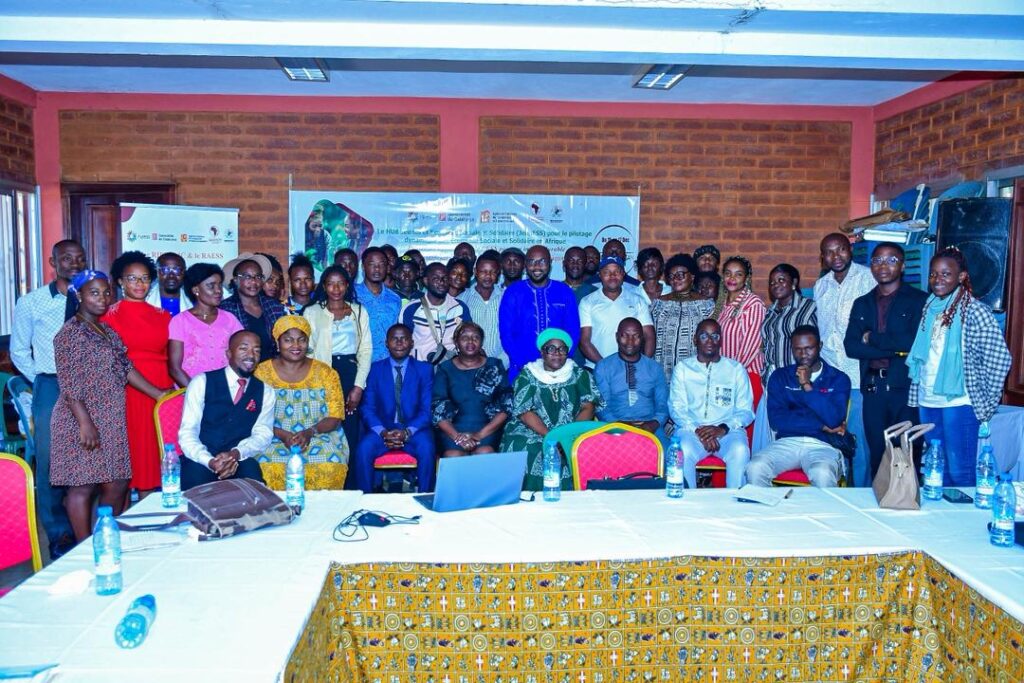
From 15 to 17 December 2025, the CIPCRE in Bafoussam hosted the preparatory work for the launch of the Youth and Social and Solidarity Economy HUB (JeunESS), a strategic initiative led by the African Network for Social and Solidarity Economy (RAESS), in conjunction with the Intercontinental Network for the Promotion of Social and Solidarity Economy (RIPESS IC).
This initiative is part of the international project ‘Regionalisation of the UN resolution on the promotion of the Social and Solidarity Economy’, which aims to adapt and operationalise international commitments to the SSE in African contexts. In a continent where young people represent a major demographic force, but also a socio-economic challenge, the social and solidarity economy (SSE) appears to be a structuring response. Based on solidarity, democratic governance, territorial anchoring and inclusion, it is a recognised lever for decent job creation, social innovation and economic resilience. The JeunESS Afrique HUB is designed as a strategic tool for structuring, coordinating and steering SSE dynamics driven by African youth. It aims to strengthen the capacities of youth organisations, promote the sharing of good practices between territories and create sustainable synergies with public institutions, the private sector and international cooperation partners.
The expectations of young actors in the field
Among the young people involved in this dynamic, Brice Talla, a social entrepreneur and member of a cooperative that manufactures pig feed from recycled organic waste, expressed the concrete expectations of grassroots initiatives with regard to the future hub. We have high expectations for the establishment of this hub. If it is indeed operational, it could help us to better structure our cooperative, strengthen our governance and develop strategic partnerships. For us, the social and solidarity economy remains a relevant response to both employment challenges and environmental issues,” emphasises Brice Talla. His testimony illustrates the real needs of young SSE organisations, which often bring innovations with a strong social and environmental impact, but face challenges in terms of structuring and scaling up.
A continental hub to pool best practices
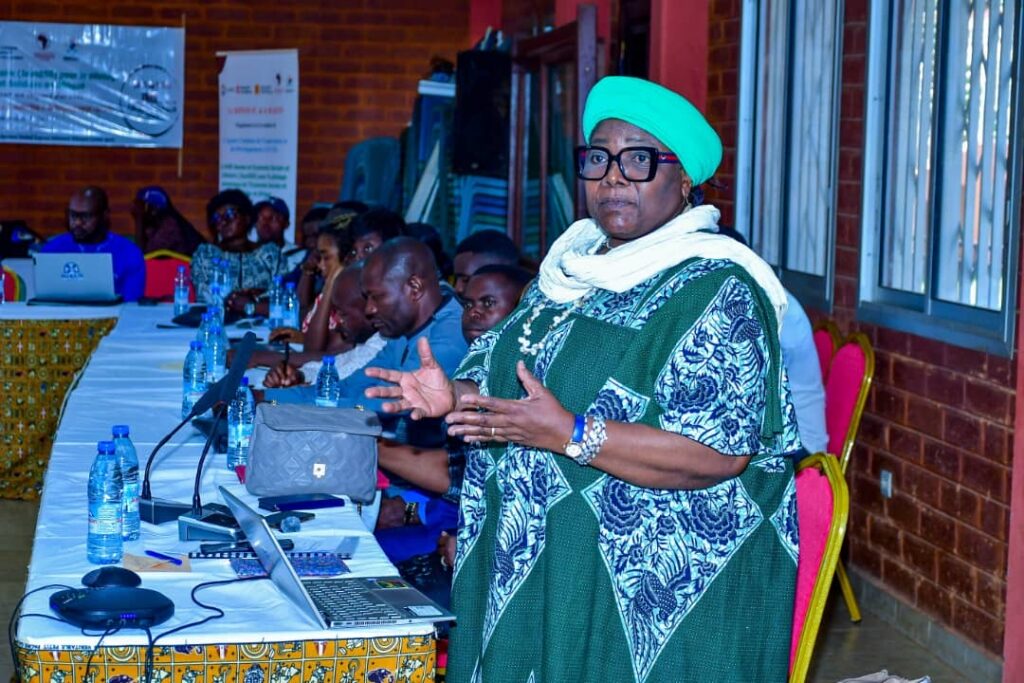
For Ms MEMONG MENO, wife of MPOUNG Elise Pierrette, coordinator of RESSCAM and Secretary General of RAESS, the establishment of the JeunESS Afrique HUB responds to a clear continental vision. This involves the launch of a hub in Africa where we have brought together young people from Cameroon, Mali and Morocco to enable them to share best practices and broaden their fields of exchange. We know that the social and solidarity economy is the right economy because it is resilient, territorialised, inclusive and capable of responding to the challenges of the moment,” she explains. She adds that the HUB JeunESS also aims to strengthen young people’s participation in the co-construction of public policies and to consolidate the SSE ecosystem on an African scale.
Bafoussam, the starting point for a continental dynamic
Over three days, young leaders, SSE organisations, experts and institutional partners took part in strategic reflection sessions, cross-sector exchanges and inspiring experience sharing on social innovation, collective entrepreneurship, solidarity financing and democratic governance. This work laid the organisational foundations for the JeunESS Afrique HUB and defined the next steps for its gradual roll-out in RAESS member countries. Through this initiative, RAESS and RIPESS IC reaffirm their commitment to making African youth a central player in steering the social and solidarity economy, in the service of sustainable, inclusive and locally rooted development.
Article originally published by Immersion-medias and Lequatriemepouvoir.
Other publicacions:
JeunESS Afrique. Un hub continental pour piloter l’économie sociales et solidaire (JeunESS Afrique. A continental hub to drive the social and solidarity economy).
Download here the event notice in the print edition, in French, in Le Messager.
See the report published by Cameroonian Radio Television. Video produced by Poli Ouafo and Renaud Onana Ndazan: