
Who we are
RIPESS LAC is a continental network that brings together various community-based, associative, co-operative and mutual organisations as well as citizens’ movements that work towards the implementation of solidarity economy in Latin America. We contribute the production and sharing of resources and knowledge that creates the basis of an alternative movement to the current capitalist system.
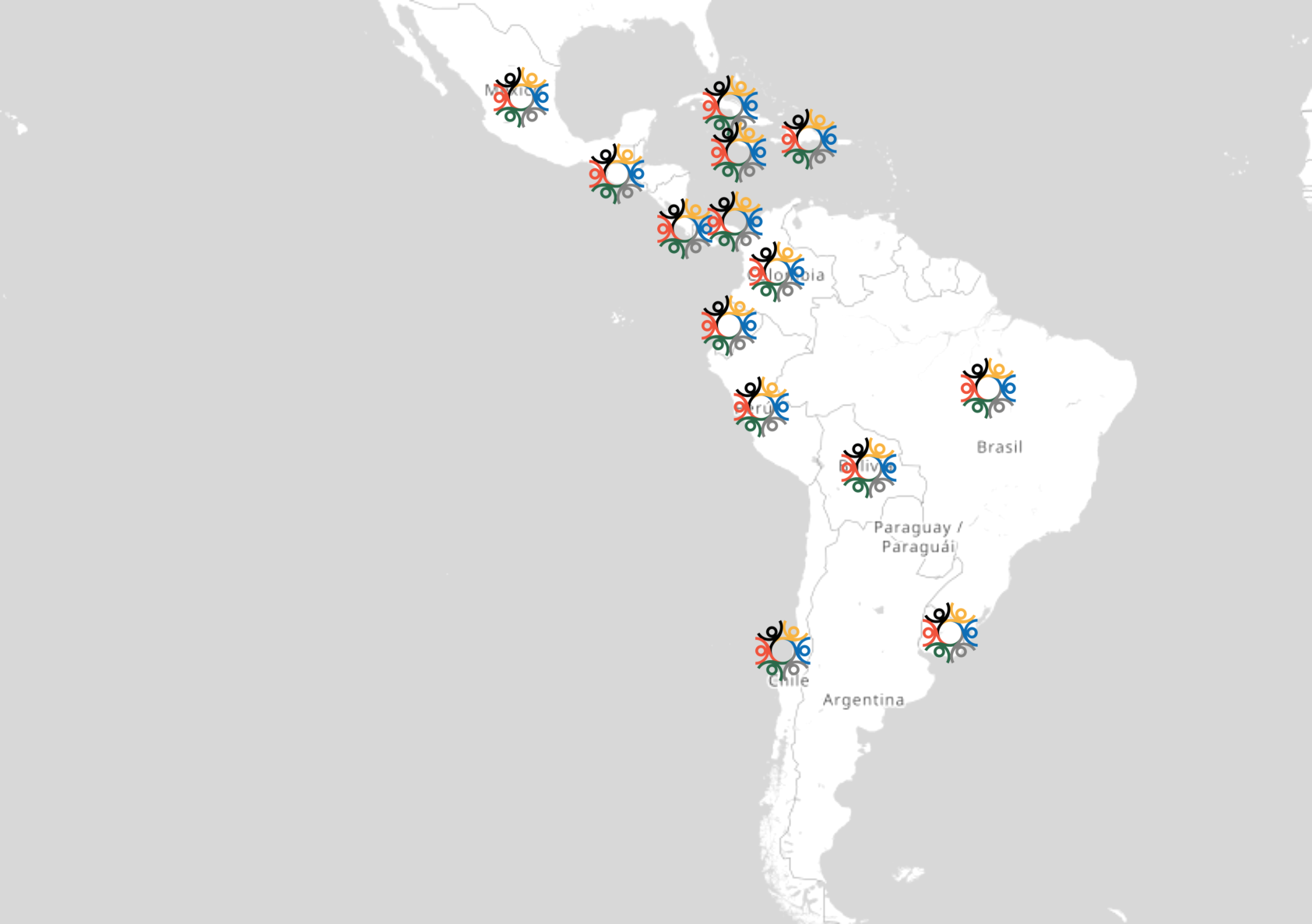
Peru, Ecuador, Bolivia, Chile, Uruguay, Cuba, Dominican Republic, Guatemala, Colombia, Mexico, Nicaragua, Puerto Rico, Costa Rica, Brazil
- GRESP (Grupo Red de Economía Solidaria del Perú)
- MESSE (Movimiento de Economía Social Solidaria del Ecuador)
- RET (Red de Economías Territoriales Wallmapu de Chile)
- MNESC (Mesa Nacional de Economía Solidaria de Colombia)
- REDESOL (Red de Organizaciones de Economía Solidaria de República Dominicana)
- Foro Brasileño de Economía Solidaria (FBES)
- Movimiento de Economía Solidaria y Comercio Justo de Bolivia (MESyCEJB)
- Red de Economía Social Solidaria (RedESS) de Costa Rica
- Red Peruana de Comercio Justo y Consumo Ético (RPCJyCE)
- Centro de Investigación Económica Mundial (CIEM) de Cuba
- Coordinadora de Economía Solidaria y Comercio Justo (CESCJ) de Uruguay
- Red Mexicana de Comercio Comunitario (REMECC)
- Confederación AGROSOLIDARIA de Colombia
- PECOSOL de Guatemala
- Instituto de Economía Social y Cooperativismo (INDESCO) Universidad Cooperativa de Colombia
- Red Nacional de Investigadores y Educadores en Cooperativismo y Economía Solidaria (REDCOOP) de México
- Red Nicaragüense de Comercio Comunitario (RENICC)
- Red ECOSOL México
- Red Cubana de Economía Social y Solidaria y Responsabilidad Social Empresarial (ESORSE)
- Comunidad Nacional de Circuitos Económicos Solidarios (CONACES)
- Red Nacional de Investigadores y Educadores en Cooperativismo y Economía Solidaria (REDCOOP) de México
- Instituto de Cooperativismo de la Universidad de Puerto Rico
- Red de Economía Social Solidaria del municipio de Mecapaca RESS-Mecapaca
- Foro de Economías Transformadoras y Alternativas de Colombia FSMET
News from Latin Amercia and the Caribbean—
RIPESS Intercontinental Publishes its 2025 Activity Report
RIPESS Intercontinental is pleased to share its 2025 Activity Report, highlighting a year marked by significant advocacy achievements, stronger global alliances, and the continued expansion of the Social Solidarity Economy (SSE) movement worldwide. The report reflects the collective efforts of our members, partners, and allies across all continents to advance economic models that place people, communities, and the planet at [...]
From Chiloé to the United Nations: Defending Territories Against the Power of Salmon Farms
Marcela Ramos of the Chiloé Island Women’s Assembly for Water, a member of the Network of Territorial Economies and RIPESS LAC,calls for a binding treaty to protect human rights, waters, and the economies that sustain life. “We need a strong, legally binding treaty.” With this demand, our colleague Marcela Ramos brought a voice rooted in Chiloé to the negotiations on [...]
RIPESS at the Regional Webinar: Social and Solidarity Economy: Paths to Building a Different Model of Development
On 26 August 2026, RIPESS Intercontinental will participate in the webinar “Social and Solidarity Economy: Pathways to Build Another Development Model”, organized by WSM and the INSPIR Network for Latin America and the Caribbean. The event will bring together social, trade union and solidarity‑based organizations from different continents to reflect on the strategic role of SSE in building fairer, more [...]