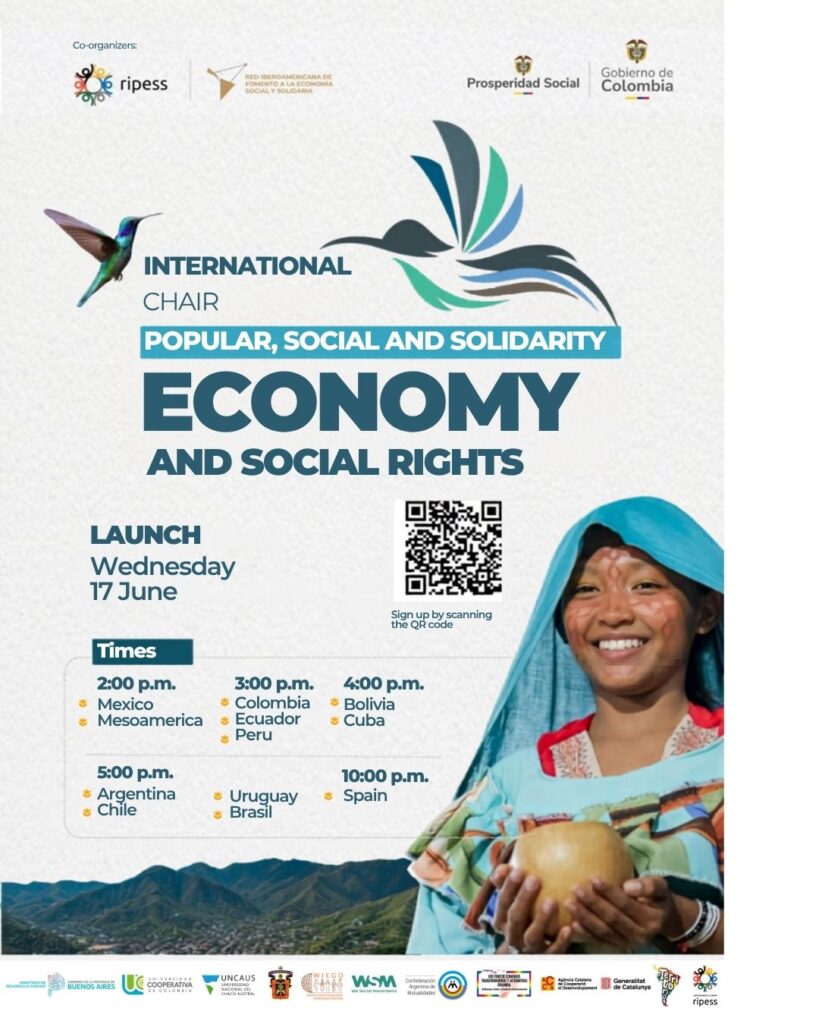
On Wednesday 17 June, the International Chair in Popular, Social and Solidarity Economy (EPSS) and Social Rights was officially launched. This is a joint initiative of the Colombian Government’s Administrative Department for Social Prosperity (DPS), RIPESS Intercontinental, the Ecoovida Platforms and the governments of the Ibero-American Network for the Promotion of the Social and Solidarity Economy (RIFESS). This initiative has been launched to strengthen the strategic, political and organisational capacities of popular, community-based, social and solidarity-based organisations throughout the country.
The call was a collective success:
1,300 people registered and nearly 300 actively participated in the inaugural session, contributing reflections, questions and experiences that enriched the debate and confirmed the relevance of this learning space.
The session was moderated by María José Varela, from Territorios en Desarrollo (Argentina) and member of the RIPESS LAC Regional Steering Council, together with Álvaro Restrepo, Head of the Cooperation Office at Social Prosperity.
Institutional Opening
The event was opened by Mauricio Rodríguez Amaya, National Director of Social Prosperity, who emphasized that this Chair is “a work woven from many hands, perspectives and dynamics, bringing together the knowledge and experiences built by territorial organizations, networks and platforms, Ecoovida, governments, academia, and national and international bodies.”
Gustavo Wansidler, General Coordinator of the Chair, and Fer Sarmiento Bonilla, Coordinator of the Methodological Development and Training GIT at DPS, presented the objectives, content and methodology.
Gustavo highlighted: “Our collective responsibility is to nurture the bonds that allow all worlds that dare to love with social justice to fit within this one.”
Participation of Academic and Government Institutions
Representatives from key institutions supporting this initiative took part:
- Colombia Pérez — Universidad Cooperativa de Colombia
- Germán Oestmann — Universidad Nacional del Chaco Austral, Argentina
- Flavia Carretto — INACOOP, Uruguay
- Cristian Amarilla — Ministry of Agrarian Development, Province of Buenos Aires, Argentina
- Ariana Burgos — IEPS, Ecuador
European governments were also represented by:
- Jaime Iglesias — Government of Spain
- Maxime Baduel — Government of France
Intervention by RIPESS Intercontinental
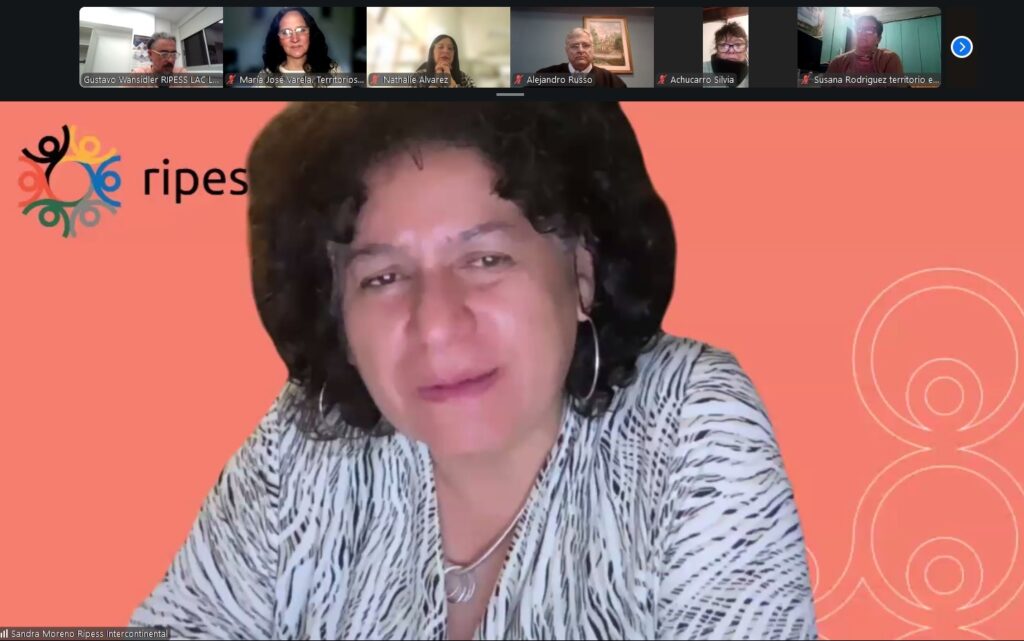
Sandra Moreno Cadena, Executive Secretary of RIPESS Intercontinental, emphasized:
“We are entering a historic turning point for the popular, social and solidarity economy. This Chair emerges from that shift. After decades of quiet work in networks and territories, we are gaining recognition in international agendas, multilateral spaces and public policies. This Chair connects global advocacy with territorial training, consolidating economies that place life at the center.”
Panel: Challenges for the Popular, Social and Solidarity Economy
Moderated by Álvaro Restrepo, the panel addressed the question:
What are the main challenges that the Popular, Social and Solidarity Economy must face, and what role can training play in strengthening its response capacities?
Panelists included:
- Ruth Quevedo Fique, Deputy Minister for Water and Basic Sanitation of the Colombian Government;
- Alejandro Russo, President of the Argentine Confederation of Mutual Societies (CAM);
- Natalia Quiroga, lecturer at the Universidad del Rosario, Colombia, and member of the CLACSO Group;
- Rogerio Dalló, Secretary-General of the Latin American Confederation of Workers’ Cooperatives and Mutual Societies (COLACOT);
- Hans Cediel Morales, Coordinator of the Forum for Transformative and Alternative Economies Network, Colombia.
Hans noted: “We are protagonists of transformations in a world in polycrisis, where economic, social and power inequalities deepen. The EPSS defends workers’ rights with essential elements of social protection.”
The panel concluded with a dynamic exchange in which participants contributed questions, experiences and reflections.
About the Chair
The Chair integrates spaces for dialogue, political training, knowledge exchange and skills development, enabling organizations to project themselves as true strategists of change.
It is an open, participatory and territorial process that recognizes the diversity of experiences within the Popular, Social and Solidarity Economies and their central role in building rights, democracy and collective well-being.
Core Objectives
- Strengthen political advocacy and strategic management.
- Promote democratic and horizontal governance and the consolidation of associative networks.
- Develop a shared strategic vision that articulates community resources, knowledge and capacities.
- Increase international visibility of Colombia’s EPSS in global networks and platforms.
The Chair will be delivered in Spanish and online.