A key meeting for the SSE in the multilateral arena
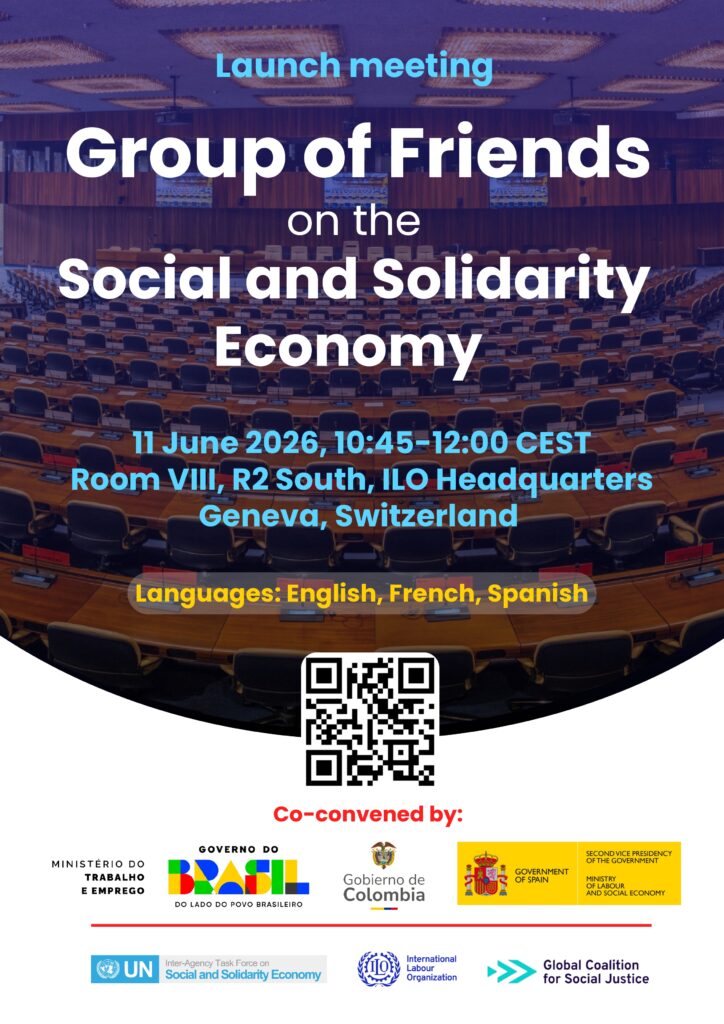
On 11 June 2026, the launch meeting of the Friends Group on the Social and Solidarity Economy (SSE) will be held at the headquarters of the International Labour Organisation (ILO) in Geneva. This initiative has been promoted by the governments of Brazil, Colombia and Spain as a contribution to the Global Coalition for Social Justice.
📅 11 June 2026, 10:45–12:00 CEST
📍 Room VIII (R2 South), ILO Headquarters, Geneva, Switzerland
Join online: https://ilo-org.zoom.us/webinar/register/WN_3rtxAkPaS8ygvjo9NVtYzA
RIPESS’s participation as a stakeholder
RIPESS, the Intercontinental Network for the Promotion of the Social and Solidarity Economy, will participate in this important meeting as one of the stakeholders invited to contribute insights during the session.
As a global network that brings together social and solidarity economy organisations and movements across all continents, RIPESS reaffirms its commitment to strengthening public policies, regulatory frameworks and international partnerships that enable the transformative impact of the SSE to be expanded in the construction of an economy based on human rights, solidarity, economic democracy and sustainability.
RIPESS’s voice at the launch of the Group of Friends
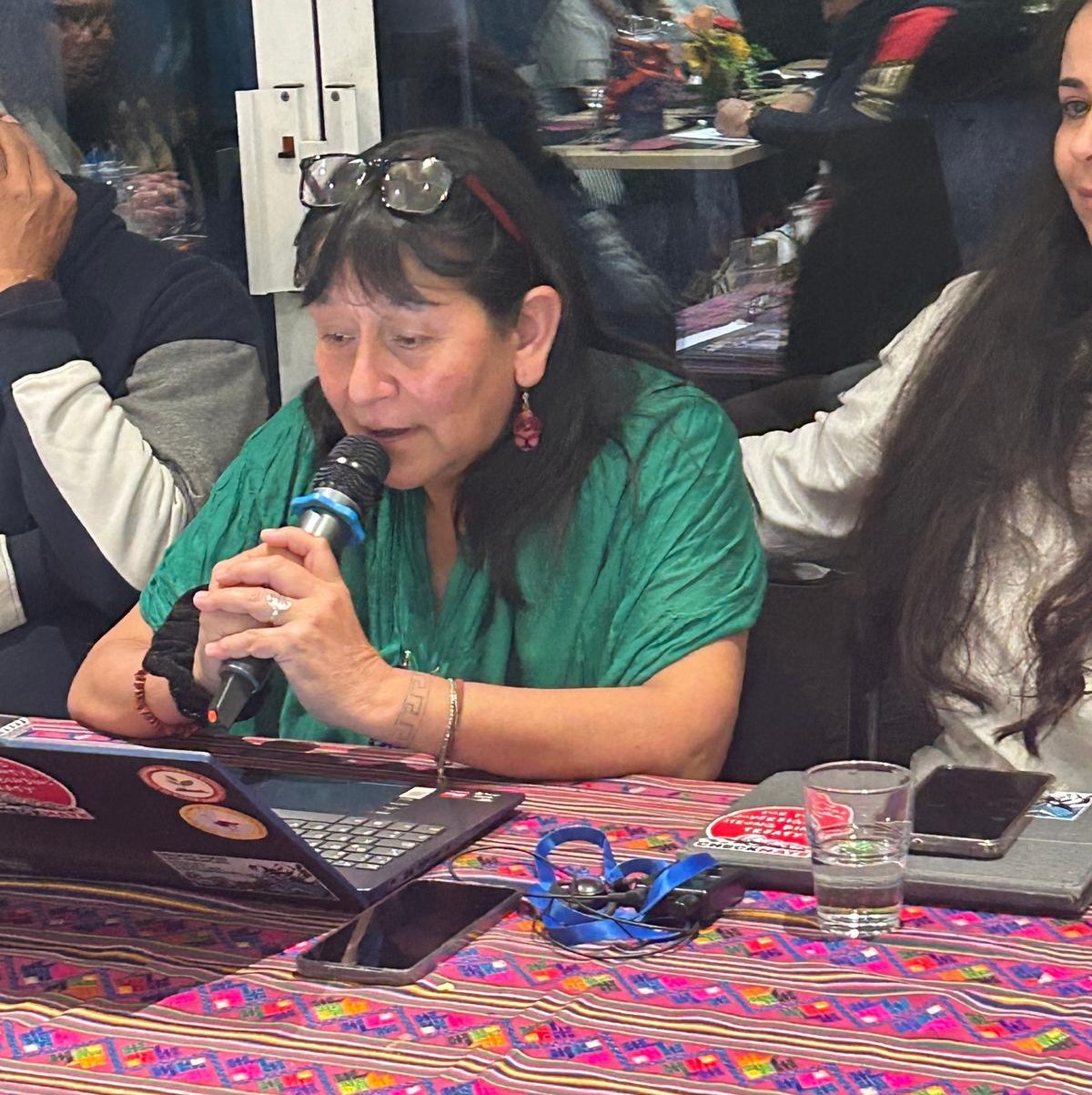
During the meeting, Sandra Moreno Cadena, Executive Secretary of RIPESS, will give a presentation focusing on the role of the Social and Solidarity Economy as a systemic response to inequalities and as a key tool for moving towards an economy based on human rights, decent work and social justice.
The speech highlights the contribution of RIPESS and its continental networks to the progress made in multilateral forums in recent years, including United Nations and ILO resolutions on the SSE, as well as various regional processes that have strengthened its institutional recognition.
Read and download the speech:
A significant step towards strengthening international cooperation
The creation of this Group of Friends represents a significant step towards strengthening intergovernmental cooperation on the social and solidarity economy, recognising its contribution to decent work, sustainable development, the reduction of inequalities and the building of fairer and more resilient societies. The Group aims to facilitate the exchange of experiences, the monitoring of multilateral processes and the promotion of favourable frameworks for the development of the SSE globally.
Growing international recognition of the SSE
The social and solidarity economy (SSE) is supported by a wider body of international, regional and national frameworks. This includes United Nations General Assembly resolutions on promoting the social and solidarity economy for sustainable development, as well as the ILO resolution concerning decent work and the social and solidarity economy and the related Strategy and Action Plan. It also includes the OECD Recommendation on the Social and Solidarity Economy and Social Innovation, the European Union Social Economy Action Plan and Council Recommendation on developing social economy framework conditions, the African Union ten-year Strategy and Implementation Plan on the social and solidarity economy, and the Ibero-American Network for the Promotion of the Social and Solidarity Economy. Together with growing legal, policy, institutional and statistical frameworks at the national level, these international and regional frameworks provide an important basis for strengthened cooperation on the social and solidarity economy.
The importance of the social and solidarity economy for a human rights economy has gained visibility across recent work linked to the Global Coalition for Social Justice. In 2024, the report Eradicating poverty beyond growth by the United Nations Special Rapporteur on extreme poverty and human rights included “stimulating the social and solidarity economy” as a priority for moving towards a human rights economy. In 2025, the SSE was highlighted at the Annual Forum of the Global Coalition for Social Justice partner-led conversation on the human rights economy. In 2026, the joint policy brief Advancing a human rights economy through the social and solidarity economy, presented at a public conference on the SSE in Turin, further elaborated this connection. The SSE is also included in the Roadmap for Eradicating Poverty Beyond Growth, to be presented at the 62nd session of the Human Rights Council.
RIPESS reaffirms its commitment to this collective journey and welcomes the creation of the Group of Friends as a space that will enable the expansion of alliances, the sharing of lessons learnt and the development of common agendas to strengthen the SSE globally.