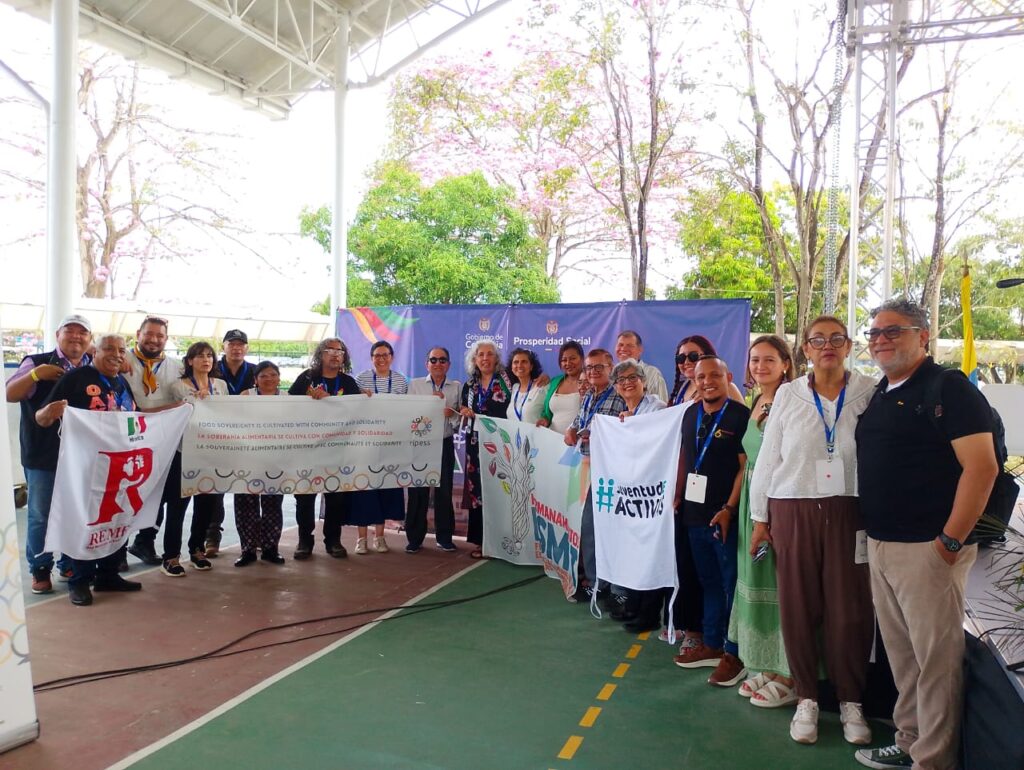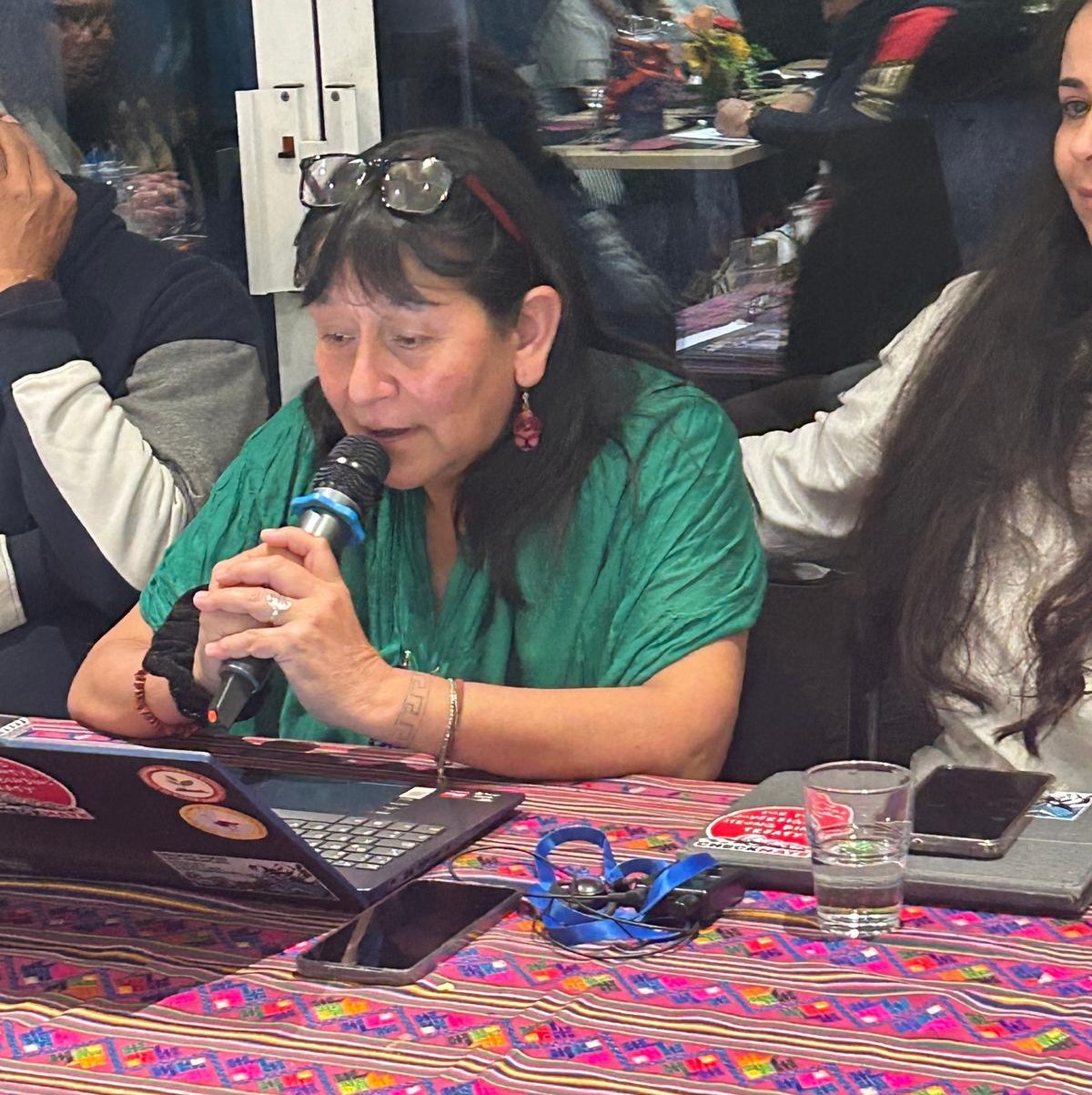
From 21 to 28 February 2026, Cartagena de Indias was the scene of a key international process for the present and future of economies for life, agrarian justice and food sovereignty. The RIPESS delegation actively participated in ECOOVIDA 2026, the Forum of Peoples and Social Movements and ICARRD+20, contributing concrete proposals from the Social and Solidarity Economy (SSE).
RIPESS’s presence reaffirmed that there can be no agrarian reform or sustainable rural development without democratic, associative and solidarity-based territorial economies.
ECOOVIDA 2026: from dialogue to a global agenda
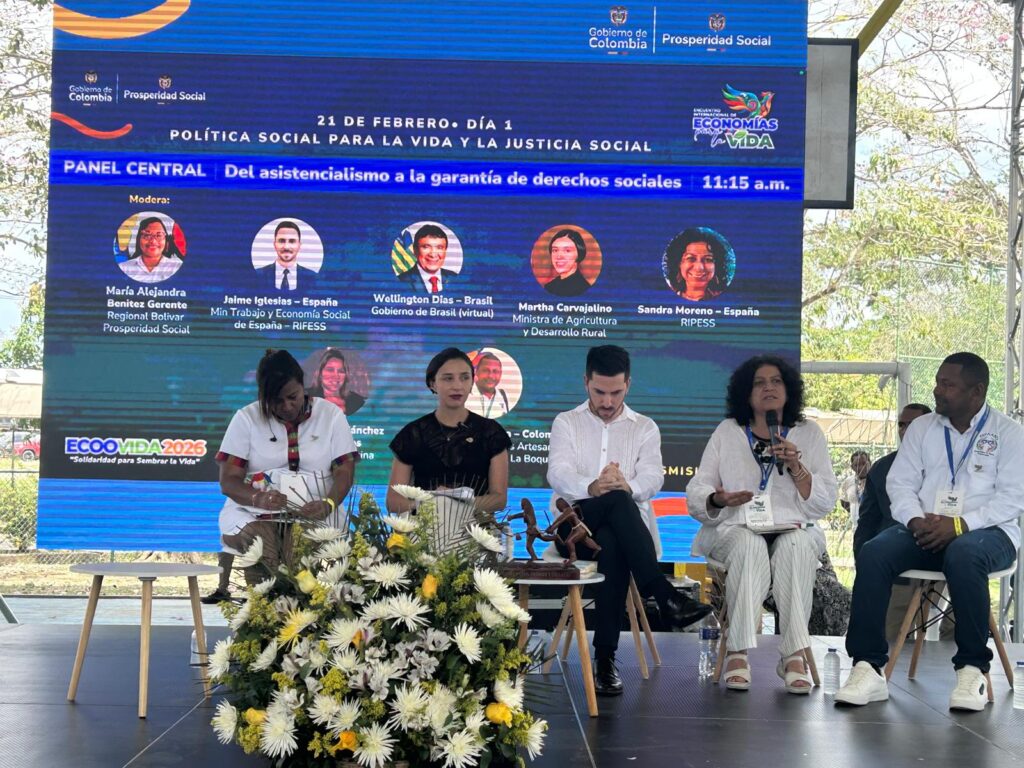
ECOOVIDA 2026 – Solidarity to sow life brought together social organisations, platforms, cooperatives and governments in Cartagena to consolidate a common agenda to tackle poverty, inequality and the climate crisis.
The meeting closed with a collective declaration ratifying the International Pact for Economies for Life and calling for the recognition and strengthening of the social, solidarity, popular and community economy as a cross-cutting axis of agrarian reform and rural development.
Among the priorities highlighted are:
- Social justice as a horizon for transformation.
- The strengthening of associative, cooperative and community forms.
- Food sovereignty as a pillar of the right to food.
- The defence of water and common goods.
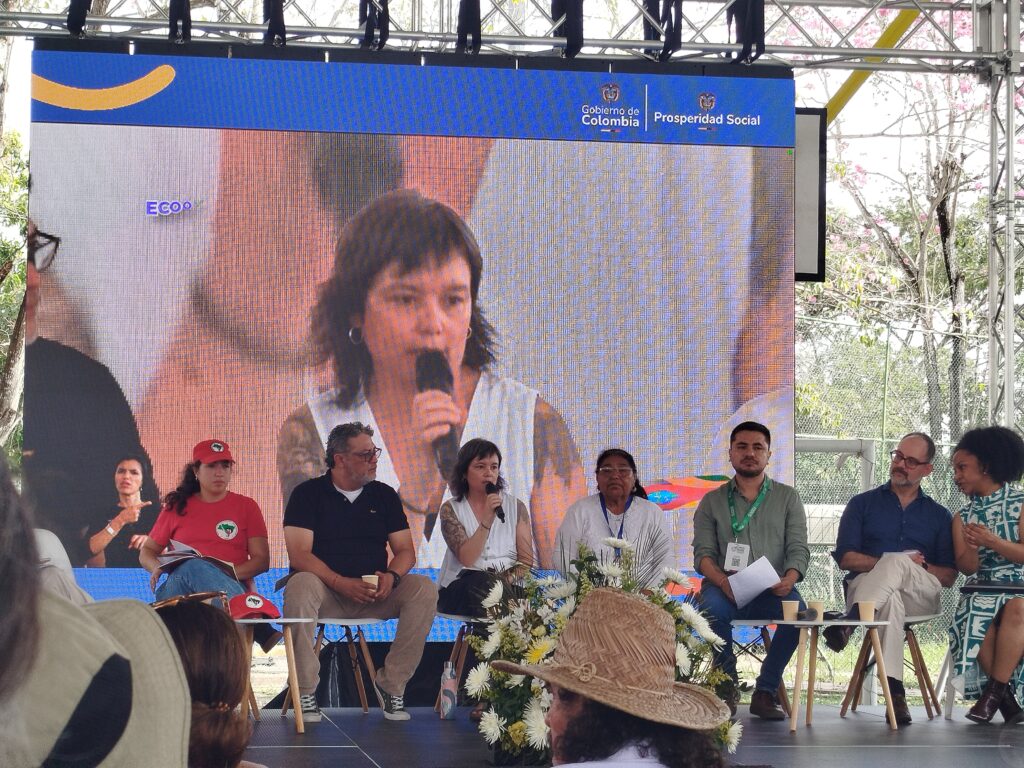
In the opening panel, Sandra Moreno, Executive Secretary of RIPESS, presented a clear roadmap for the transformation of the economic model: democratic governance, value retention in the territories, democratisation of work and strengthening of social protection. She emphasised that solidarity economies seek not only inclusion in existing markets, but also the reconfiguration of productive relationships.
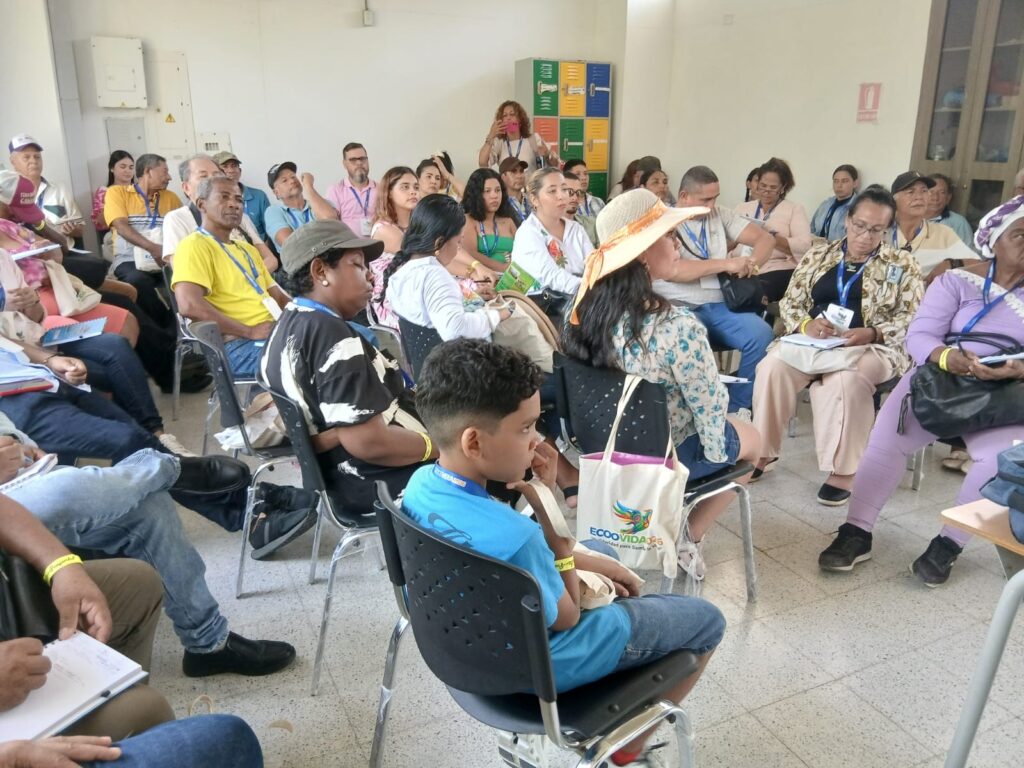
The RIPESS delegation had a broad and diverse participation in ECOOVIDA 2026 and related spaces in Cartagena de Indias, articulating voices from Latin America, Europe and territorial networks. On 21 February, Mario Flores (REMEC) participated in the opening and official launch of ECOOVIDA, Sandra Moreno (Executive Secretary, RIPESS) spoke on the panel ‘From welfare to the guarantee of social rights’, while Wagner Suazo, from the Costa Rican Social and Solidarity Economy Network, participated in the Forum on productive inclusion. On 22 February, Valeska Sarmiento (RIPESS Intercontinental Co-coordinator / ADAM) spoke about the promotion of popular and solidarity economies as a driver of territorial change. Celina Valadez and Rosa María Benítez (Cooperativism), Sebastián Garaviño (Territorial Impact of the SSE), Gustavo Wansidler (Popular Education) and Isabel Pascual (Communications and Project officer, RIPESS) participated in the simultaneous forums. On 23 February, Ana María Condori Fernández, from the Social and Solidarity Economy and Fair Trade Movement, participated in the panel ‘From assistance to food sovereignty’, while Mario Flores addressed agroecological production and distribution and Raúl Luna addressed own consumption.
More information on the agenda and participation of the RIPESS delegation.
RIFESS: political coordination between governments and organisations
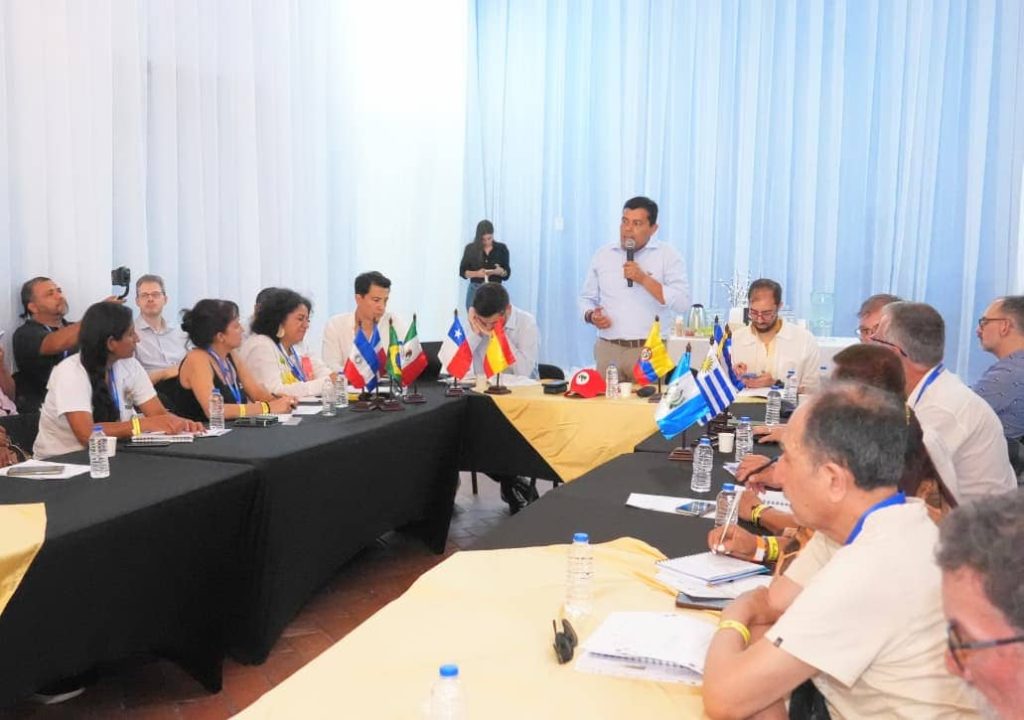
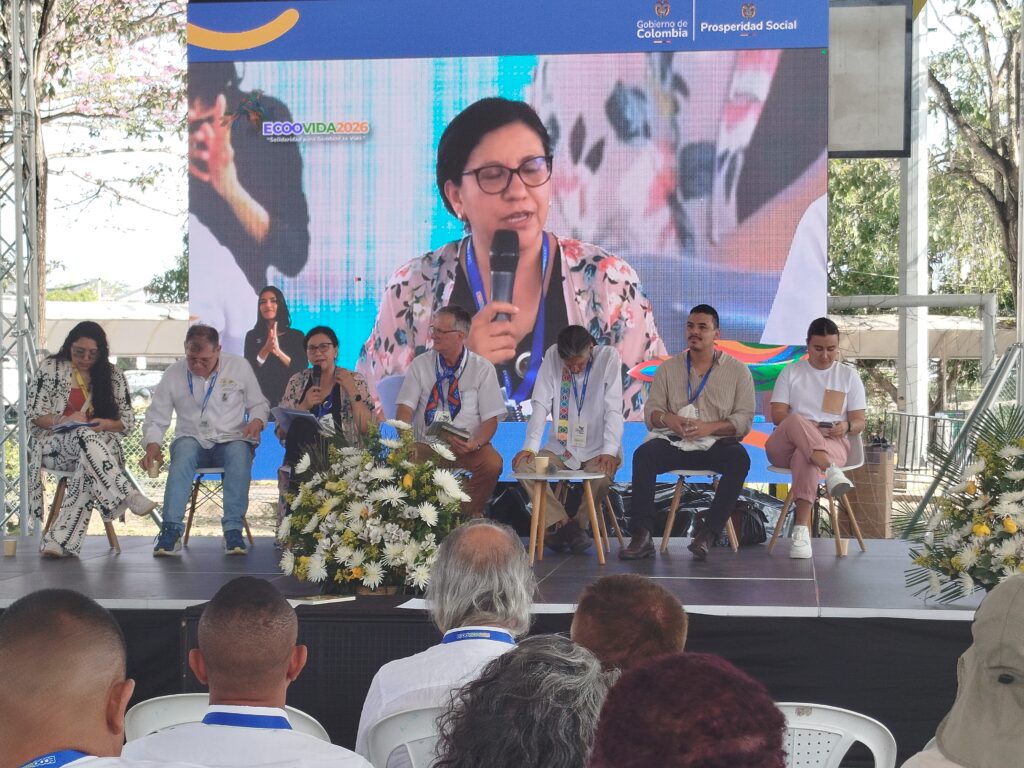
On 22 February, within the framework of ECOOVIDA 2026 in Cartagena de Indias, a session of the Ibero-American Network for the Promotion of Social and Solidarity Economy (RIFESS) was held as a space for political dialogue between governments and organisations of economies for life. Government delegations from Colombia, Spain and Paraguay participated in person, along with virtual representatives from several countries in the region, as well as a large presence of territorial networks and movements.
The session allowed for the definition of priorities for 2026 and progress on a Joint Declaration by RIFESS and the organisations, reaffirming the strategic role of the Social and Solidarity Economy in the transformation of the countryside, the strengthening of territorial circuits and the progressive guarantee of the human right to food, beyond welfare or purely productive approaches.
The RIFESS Declaration reaffirms the strategic role of the Social and Solidarity Economy in building inclusive, sustainable and socially just models, and proposes to advance concrete actions through:
- Popular education for the transformation of the countryside.
- Promotion of associativity and territorial networks for fair food systems.
- Solidarity communication as a tool for regional advocacy.
People’s Forum: LAND is Not a Commodity. It is LIFE
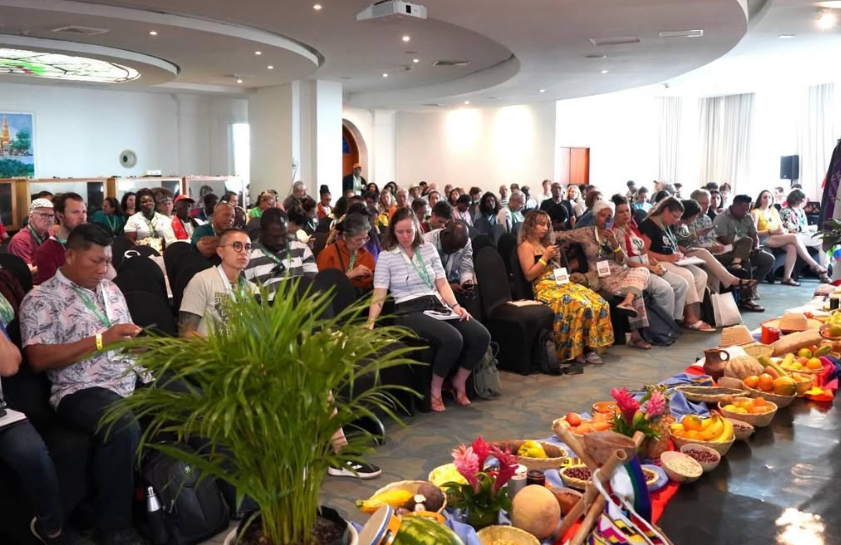
On 23 and 24 February, the Forum of Peoples and Social Movements: United for Land, Water, Territories and Dignity brought together delegations from more than 70 countries in Cartagena de Indias. Convened by the International Planning Committee for Food Sovereignty (IPC), with the participation of networks such as La Vía Campesina and RIPESS, represented by Dražen Šimleša (RIPESS Europe), the Forum established itself as an autonomous space for political articulation prior to the official conference.
In this space, the structural causes of the agricultural, food and climate crises were denounced: the growing concentration of land, water and natural resources in corporate and financial hands, the advance of dispossession and the deepening ecological collapse affecting peasants, indigenous peoples and rural communities.
In response, the IPC presented a Position Paper to ICARRD+20 with a strong message: twenty years after the first conference, voluntary commitments are not enough. What is needed is redistributive, binding and transformative agrarian reform based on food sovereignty, collective rights and social justice.
ICARRD+20: SSE on the global agenda for agrarian reform
The FAO provided technical support to the International Conference on Agrarian Reform and Rural Development (ICARRD+20), organised by the Government of Colombia, which brought together more than 100 countries.
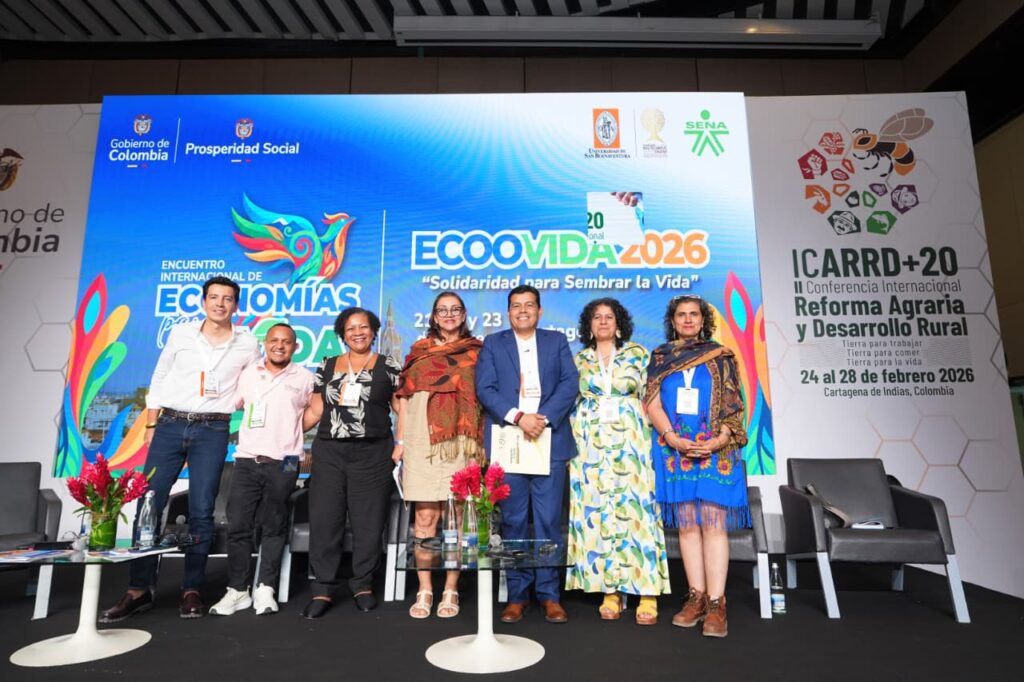
RIPESS participated in the panel ‘Economies for Life: Global Alliances for Productive Inclusion and Agrarian Justice’ in which the ECOOVIDA 2026 process was shared, demonstrating that co-creation between the State and social organisations can generate concrete proposals on agroecology, fair markets and food sovereignty.
The final declaration of ICARRD+20 incorporates explicit references to the social and solidarity economy within the framework of rural development policies, including:
- Public and participatory programmes for agroecological production and processing.
- Territorial markets based on the social and solidarity economy.
- Community-controlled processing and distribution infrastructure.
- Fair pricing mechanisms and public procurement prioritising small-scale producers.
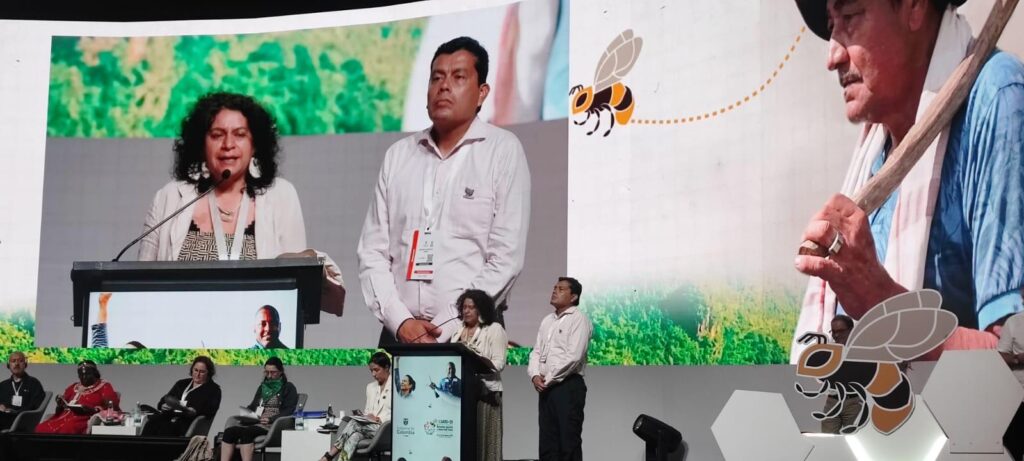
In addition, on the occasion of ICARRD+20, Mauricio Rodríguez, Director of Social Prosperity of the Colombian government, and Sandra Moreno, Executive Secretary of RIPESS, read the ECOOVIDA 2026 declaration in front of Paulo Texeira, Minister of Agriculture of Brazil, Máximo Torero, chief economist of the FAO, Rocío Medina-Bolívar, regional director for Latin America and the Caribbean of IFAD, and other leaders of social movements.
RIPESS’s intervention in this space reinforced the need for the SSE to have legal, financial and statistical recognition and to be integrated as a structural component of rural policies.
Colombia and RIPESS sign international cooperation agreement
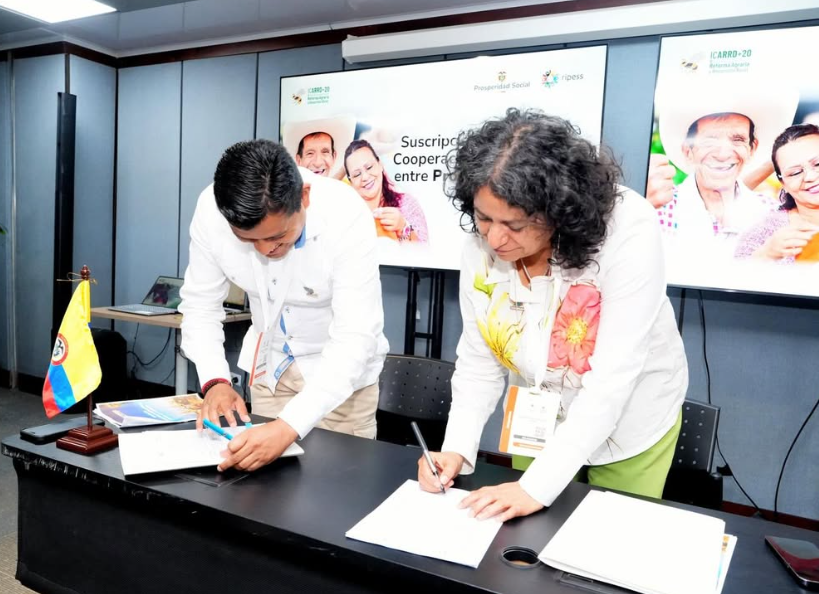
Within the framework of ICARRD+20, on 28 February 2026, an international cooperation agreement was officially signed at the Cartagena de Indias Convention Centre between the Administrative Department for Social Prosperity of the Government of Colombia and RIPESS.
The agreement, signed by Álvaro Mauricio Rodríguez Amaya on behalf of the Government of Colombia and Sandra Moreno Cadena on behalf of RIPESS, aims to strengthen the Popular, Social and Solidarity Economy (EPSS) through the management and circulation of knowledge, dialogue, the exchange of experiences between national and international actors, and the generation of inputs for the design and strengthening of public policies.
The agreement also provides for institutional coordination, advocacy in governance spaces, and support for social, community, and popular organisational processes. The agreement is based on the recognition of the country’s associative potential and the need to promote the popular, social, solidarity, and community economy as a strategic axis in national and international scenarios.
With this signing, the Government of Colombia and RIPESS reinforce their commitment to economic models focused on social justice, sustainability, and democratic governance, consolidating a concrete step towards more equitable and resilient territories.
Land, economy and sovereignty: a common narrative
Don’t miss the videos, in Spanish, made during the process:
Isa Álvarez (Urgenci – RIPESS Intercontinental) highlighted that agrarian reform is ultimately a question of access to land and, therefore, of the right to food and food sovereignty.
For his part, Gustavo Wansidler (RIPESS LAC) recalled that the popular, social and solidarity economy constitutes the real basis of our societies, especially in Latin America and the Caribbean, and that it is from this territorial economy that concrete responses to inequality are built.
Both interventions reflect the same conviction: without a popular economy there is no sovereignty, and without access to land there is no dignified life..
One delegation, multiple territories, a common agenda
RIPESS’s participation in Cartagena was not merely symbolic. It was a coordinated political intervention, with a presence in strategic panels, simultaneous forums, spaces for intergovernmental coordination and the international conference.
The Cartagena process leaves a clear message:
the Social and Solidarity Economy is an essential actor in transforming the economic model, democratising access to land, strengthening fair food systems and guaranteeing social rights.
From Cartagena, RIPESS reaffirms its commitment to a global agenda that puts life at the centre and moves towards agrarian reform with social justice, food sovereignty and the defence of common goods.