10 July 2026
At the close of the 2nd edition of the African Forum on Social and Solidarity Economy (FORA’ESS), held in Dakar from 7 to 9 July 2026, African ministers and heads of delegation adopted the Dakar Declaration on the Consultative Committee of Ministers responsible for Social and Solidarity Economy in Africa. This Declaration confirms the establishment of a framework for dialogue and convergence aimed at strengthening political coordination, continental cooperation and advocacy for SSE, while supporting the effective implementation of the African Union’s Ten‑Year Action Plan on Social and Solidarity Economy.
RIPESS — the Intercontinental Network for the Promotion of Social and Solidarity Economy — and its African continental network, RAESS, strongly welcome this major step forward for Africa. The networks particularly highlight the consolidation of a more visible African governance of SSE, as well as the role entrusted to Senegal in chairing the Consultative Committee. This institutional architecture is fully aligned with the vision of Agenda 2063, which positions SSE as a lever for inclusive growth, social justice, territorial resilience and shared prosperity.
An African SSE diplomacy in the making
The ministerial meeting held in Dakar alongside FORA’ESS gave ambitious political content to this new framework. Ministers recalled that African SSE diplomacy is expected to become a strategic instrument to strengthen alliances across the continent and position Africa not only as the historical cradle of many solidarity‑based practices, but also as a centre of influence for SSE in regional and international arenas.
Speakers emphasised the need to harmonise public policies, share experiences among States, develop an African framework of proposals across all sectors, and support the appropriation of the African Union’s ten‑year strategy through concrete coordination and cooperation mechanisms. Several countries stressed common priorities: the progressive formalisation of the popular and informal economy, mapping and registration of SSE actors, the establishment of preferential fiscal and financial mechanisms, and the development of an African SSE Observatory based on national observatories.
These orientations echo the proposals long defended by African SSE networks, particularly RAESS, which advocate for institutional, statistical, financial and political recognition of SSE at continental level.
RIPESS and RAESS contributions in Dakar
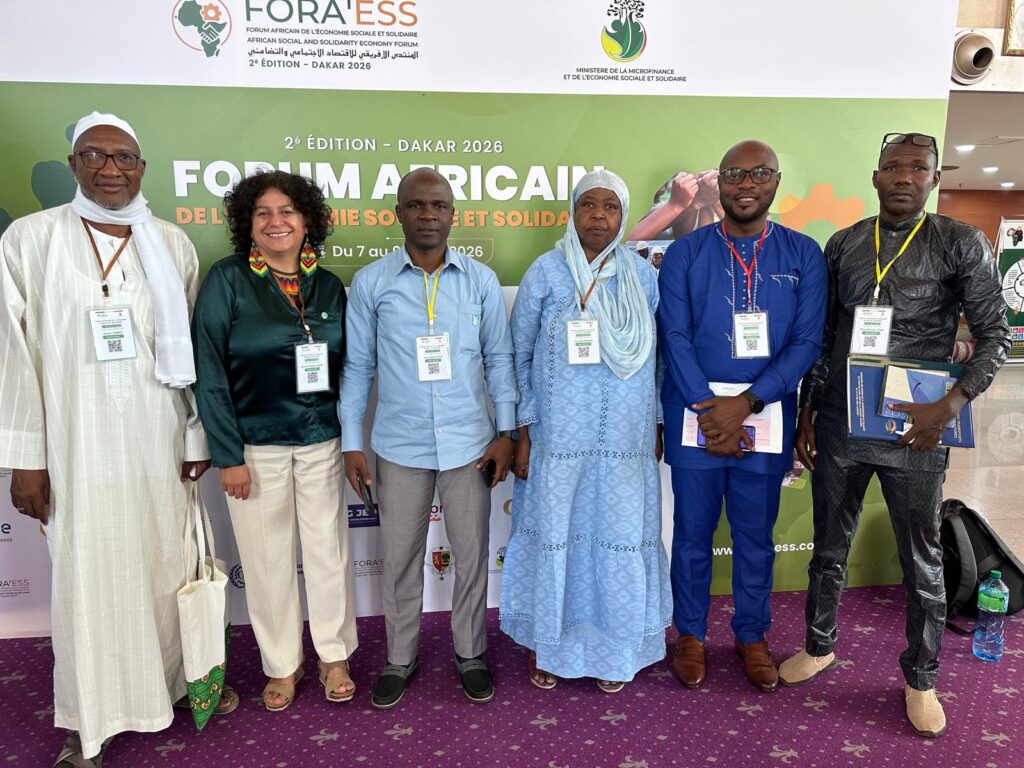
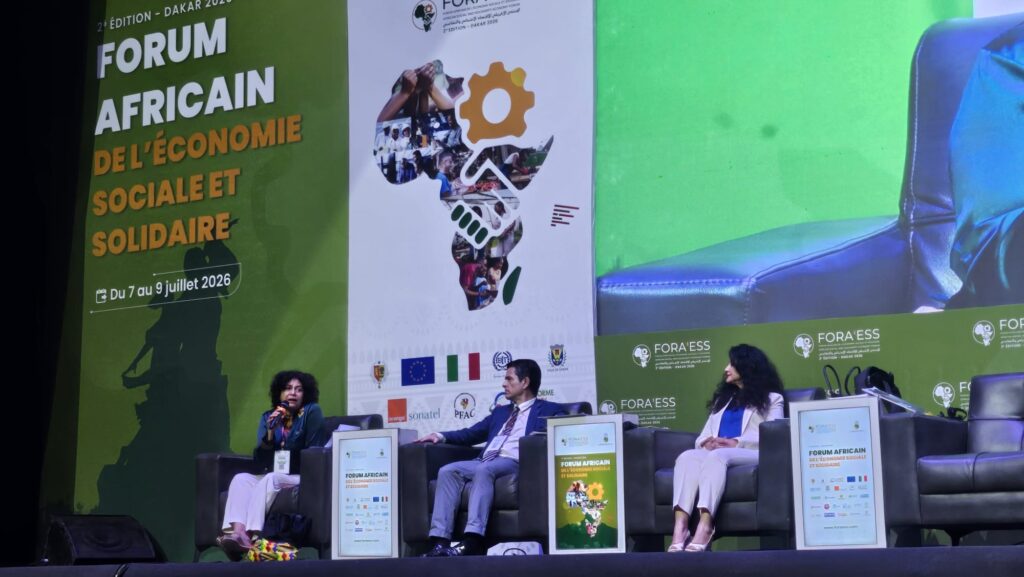
In this context, RIPESS’s participation in FORA’ESS 2026 was particularly significant. RIPESS took part in plenary sessions dedicated to international alliances and innovative financing for a transformative SSE in Africa, recalling the need to build financial architectures adapted to territorial realities and specific, differentiated financing mechanisms for SSE that are not absorbed into general policies for micro, small and medium‑sized enterprises.
RIPESS also participated, as an observer organisation, in the ministerial meeting of 8 July, dedicated to deliberations on the Consultative Committee and key national SSE strategies. This presence made it possible to highlight the experience accumulated by African SSE networks in ecosystem building, public policy support and alliance‑building among governments, territorial authorities, community organisations, citizen networks, cooperatives, mutuals and solidarity finance actors.
RIPESS emphasises the central role of its African continental network, RAESS, in this dynamic. Heir to a long process of SSE structuring in Africa — initiated with the creation of national networks as early as 2003 and consolidated with the founding of RAESS in 2010 — this network is today a strategic actor for territorial anchoring, political dialogue and continental cooperation around SSE. The Dakar Declaration explicitly recognises the contribution of African civil society to the development of SSE, which is a positive signal for organised citizen networks.
Special attention should be paid to the participation of RESSCAM, the Cameroonian network and RIPESS member, due to its political and strategic responsibility at continental level. RESSCAM holds the African co‑presidency of SSE actors within the GSEF, alongside the City of Dakar, in partnership with REMCESS, the Network of Municipalities for SSE in Cameroon. This co‑presidency reflects the concrete leadership of African networks in international SSE representation spaces.
By articulating the voices of actors, territories and local authorities, RESSCAM and REMCESS contribute to building a strong African vision of SSE, rooted in the practices, knowledge and innovations of African communities. In a context where the institutional visibility of some African networks is not always recognised at the level of their commitment, RIPESS considers it essential to give RAESS and RESSCAM their rightful place in narratives, alliances and governance spaces of SSE.
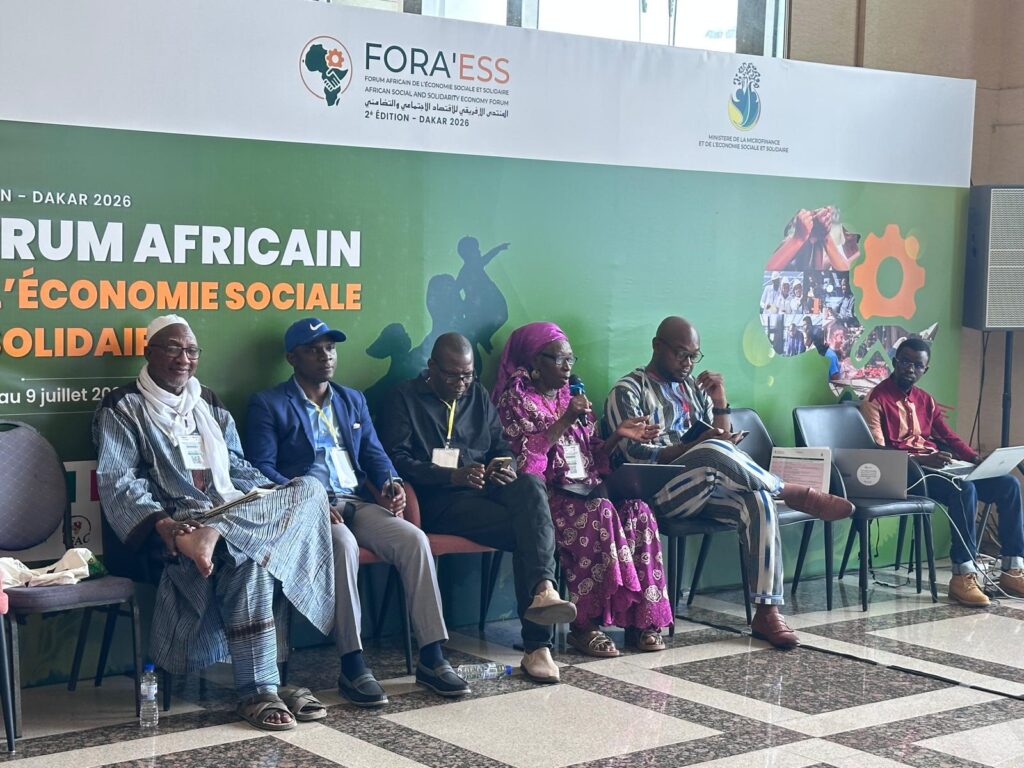
The dynamic in Dakar was nourished by the mobilisation of RAESS member networks — notably in Cameroon, Senegal, Côte d’Ivoire and Mali — as well as by alliances built with local actors. The forum strengthened convergence around financial mechanisms adapted to SSE, support for territorial value chains, debates on social protection and the progressive formalisation of the popular economy, the socio‑economic empowerment of women and young people, and the valorisation of Africa’s agro‑food potential through endogenous solutions.
For RIPESS, participation in FORA’ESS Dakar 2026 represents a political, strategic and collective success. This success is based on the mobilisation of its African networks, the quality of alliances built, the growing recognition of the need for financial mechanisms adapted to SSE, and the willingness expressed by many African States to deepen their national strategies to sustainably strengthen the SSE ecosystem. RIPESS and RAESS reaffirm their readiness to support the Consultative Committee of Ministers responsible for SSE in Africa, accompany the creation of the African SSE Observatory, and continue strengthening the role of African networks in global SSE governance.
* To download the press release, please click here