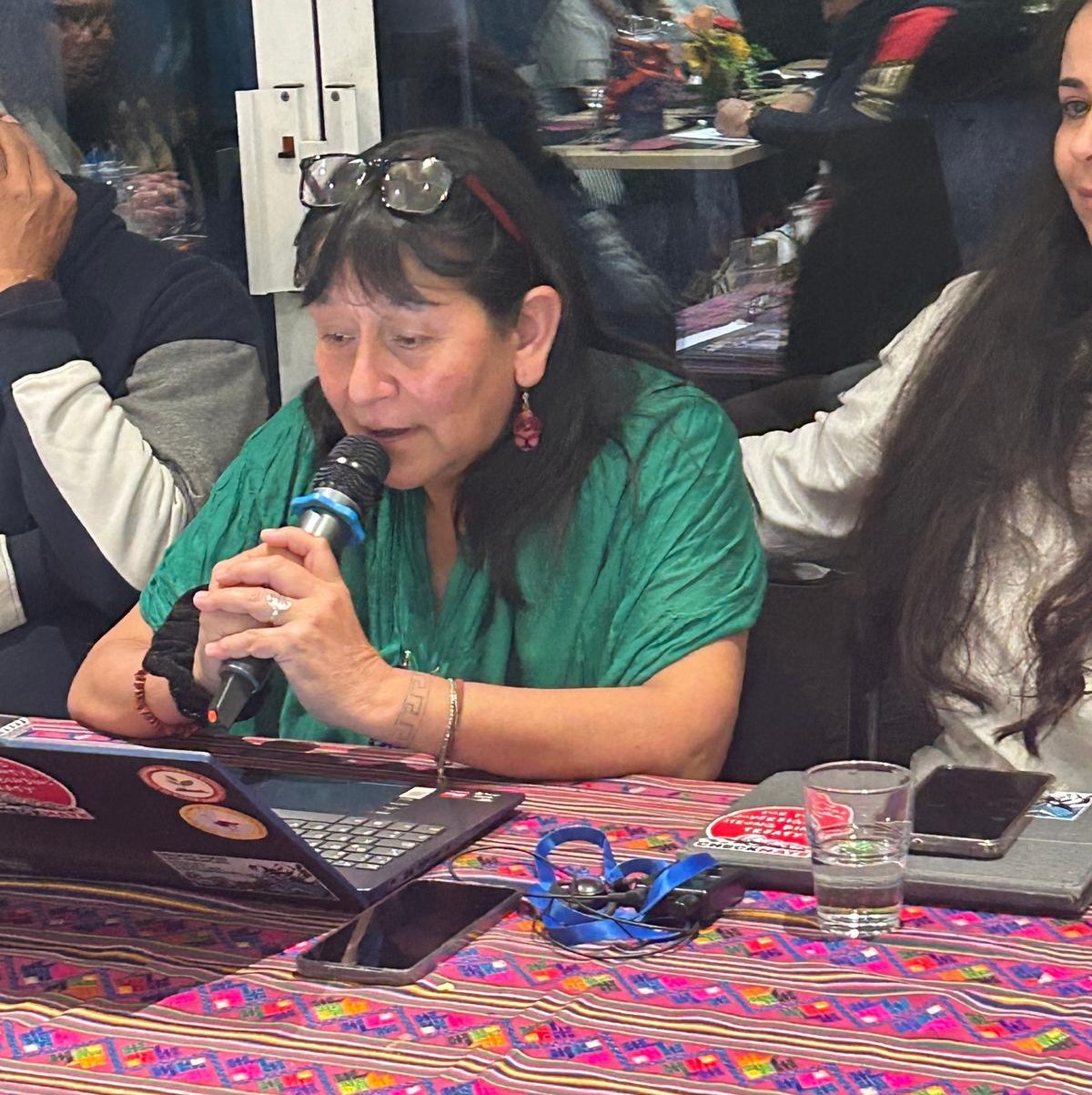
Marcela Ramos of the Chiloé Island Women’s Assembly for Water, a member of the Network of Territorial Economies and RIPESS LAC,
calls for a binding treaty to protect human rights, waters, and the economies that sustain life.
“We need a strong, legally binding treaty.” With this demand, our colleague Marcela Ramos brought a voice rooted in Chiloé to the negotiations on the legally binding treaty: the voice of those who defend their waters, their livelihoods, and their right to decide the future of the territories they inhabit.»
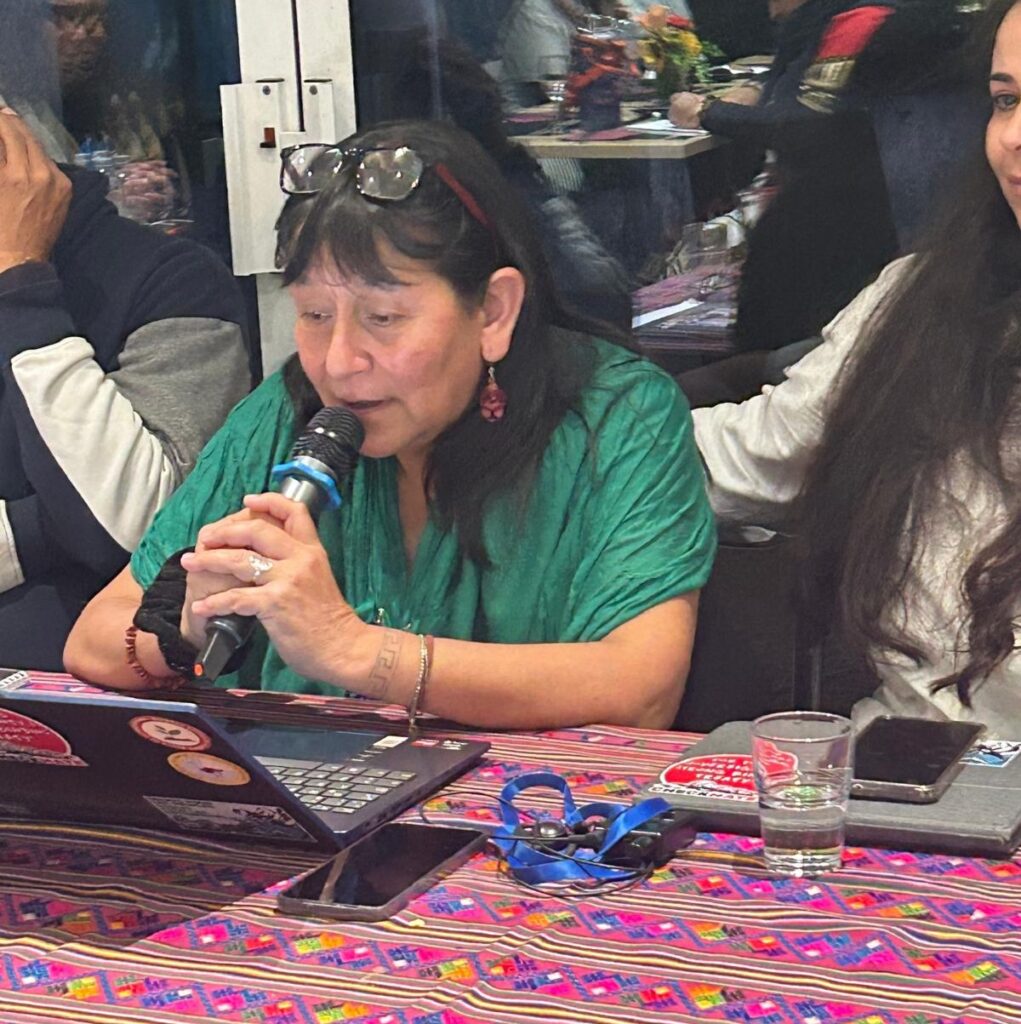
Marcela Ramos, Assembly of Island Women for the Waters of Chiloé, Chile
Marcela was in Geneva this week, denouncing the impacts of the salmon farming industry and the growing subordination of territories to the interests of large corporations. Her struggle links the defense of human rights to a central issue for the social and solidarity economy: who decides on the commons and what kinds of economies we want to sustain. An article published this week by El Clarín places this defense of Chiloé within a broader mobilization of fishing communities against the privatization of the sea and the expansion of corporate power.
Chiloé: A Living Territory, Not a Sacrifice Zone
In her remarks, Marcela denounced the labor violations and the environmental and cultural impacts associated with the expansion of salmon farming. She also questioned why pension funds and public resources contribute to financing companies that violate the rights of individuals and their communities. Her criticism is not limited to the harm caused by a single industry. She challenges a model that concentrates profits while leaving behind pollution, the deterioration of ecosystems, and the loss of livelihoods in these territories. This is also the concern highlighted by El Clarín in its description of the consequences of industrial salmon farming for coastal communities in southern Chile.
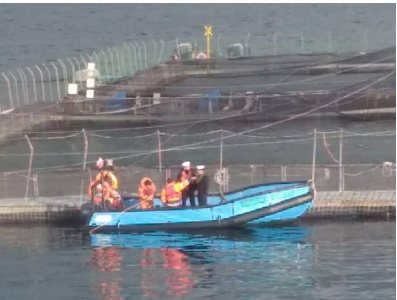
Photo published in Ecoocéanos: “Salmon of Blood: Another Labor Tragedy in the Salmon Industry on Chiloé.”
Marcela also warned about the construction of large wind farms, which, she explained, threaten the islands’ peatlands and water sources. In her remarks, she called for environmental protection and the energy transition not to be used as justification for imposing new projects without respecting the rights and decisions of those who inhabit these territories.
“We need a strong, binding treaty that allows us to protect our territories from false solutions and erroneous justifications for turning these territories into sacrifice zones,” she stated.
Defending territorialized economies means defending life
From the perspective of the social solidarity economy, this struggle embodies the essence of territorialized economies: economies rooted in communities, in their knowledge, in their relationships of care, and in the collective capacity to sustain life. In Chiloé, defending the waters and ecosystems also means defending fishing, agriculture, food, and the continuity of cultural practices. It is not a matter of protecting a landscape separate from its inhabitants, but rather of preserving the conditions that allow communities to live, produce, and make decisions within their territory.
Marcela’s statement places food sovereignty at the center of this defense. In the face of a perspective that reduces the archipelago to a space available for exploitation, she asserts its biological and cultural wealth and the possibility of continuing to build economies that serve its people. Marcela’s defense of Chiloé is not limited to denouncing the impacts of large-scale industries. It is also expressed in the day-to-day development of alternative ways of producing, exchanging, and consuming—ways that are rooted in the communities and committed to caring for their territories.
Marcela is a member of the La Melga Community, a collective of producers and consumers that has been active since 2015 and is affiliated with the Slow Food movement. The group promotes good, clean, and fair food, based on agroecology, recognition of food producers, and appreciation for local products and dishes. Defending food sovereignty and access to water and land is an explicit part of its objectives. La Melga organizes farmers’ markets and participates in other producer gatherings, in addition to preparing a monthly basket of local products for dozens of people. These practices bring producers and consumers closer together and offer a concrete way to sustain agroecological production and access to locally grown food.
The community also organizes workshops and a Self-Education School in Agroecology, which expands this work of collective exchange and learning. The partnership with the Network of Territorial Economies, which is part of RIPESS LAC, has opened up new avenues for collaboration. Marcela explains that, since joining the network, they have conducted exchange visits and participated jointly in fairs. These experiences connect local initiatives and enable the sharing of knowledge and organizational models rooted in the
solidarity economy.
Sponsoring a Potato: Preserving Chiloé’s Biodiversity and Traditional Knowledge
One of the initiatives supported by La Melga is Yolanda Millapichún’s potato garden. Yolanda cultivates 112 different varieties of potatoes, which she must replant every year. To support this work, the community has launched a sponsorship campaign: each person contributes 10 euros annually to sponsor a potato, with the funds going toward the agricultural work needed to maintain the crop. This initiative embodies a concrete form of economic solidarity: sharing the cost and responsibility of preserving food diversity that depends on the labor and knowledge of those who cultivate it. The contribution is not intended to generate a financial return, but rather to sustain the work of caring for and reproducing life.
Through this experience, food sovereignty takes on an everyday meaning: preserving seeds and crops, recognizing those who care for them, sustaining local production, and strengthening the ties between the countryside and the community’s tables.
Protecting territories so that other economies can exist
Farmers’ markets, agroecological food baskets, exchanges, and the potato garden demonstrate what it means to defend territorialized economies in Chiloé. It is not merely a matter of curbing activities that harm ecosystems, but also of protecting the conditions that allow communities to feed themselves, work, pass on their knowledge, and decide their own future.
From this perspective, Marcela’s fight for a binding treaty and her participation in La Melga are part of the same commitment: to set limits on corporate power that threatens territories and to strengthen economies based on cooperation, food sovereignty, and the care of the commons.
A treaty to limit corporate power
The demands raised by Marcela demonstrate why territorial defense also requires international tools. In her remarks, she called for obligations to prevent violations of labor and environmental rights, accurate information on the effects of business activities, and measures to address conflicts of interest and corporate influence on public decision-making.
The treaty she is calling for must make it possible to prevent harm, hold parties accountable, and ensure that the rights to health, water, and a pollution-free environment are not subordinated to corporate profits.
Defending the territory also means respecting the self-determination of communities and their right to decide who represents them. This also implies respecting the indigenous peoples’ own forms of organization and representation. Marcela echoes the complaint made by the Calbuco Roundtable of Indigenous Communities and Associations, which rejects the proclamation of individuals from outside the community as “supreme chiefs,” as they lack legitimacy and community support. Their statement calls on the authorities to engage in dialogue with organizations that have a long history and track record in the territory. Marcela links this dispute to efforts to weaken the Lafkenche Law, which recognizes and protects the traditional uses of coastal and marine areas by Indigenous peoples. For her, this case underscores the need for a treaty that protects collective rights against corporate interference.
These demands are part of the struggle of the Global Campaign to Reclaim Peoples’ Sovereignty, Dismantle Corporate Power, and End Impunity, of which RIPESS is a member. The Campaign brings together social movements, labor unions, organizations, and affected communities calling for a binding United Nations treaty on transnational corporations and human rights.
The Voices of Fishing Communities in the International Debate
Marcela’s statement is part of a mobilization that connects territorial struggles across different continents. The Campaign brings together the voices of representatives from Chile, South Africa, and Sri Lanka who denounce the appropriation of maritime spaces, the deterioration of ecosystems, and the undermining of ways of life tied to the sea. Their demands converge on the need for effective mechanisms of corporate accountability and access to redress.
These voices contribute to the international debate with knowledge rooted in the territories and in the experiences of those facing the harm. Their participation serves as a reminder that a treaty cannot be drafted without consulting the communities whose rights it is meant to protect.
At RIPESS, we are raising awareness of the struggle of our colleague Marcela and the communities defending Chiloé. Their demand directly challenges those of us who work for a social and solidarity-based economy: defending alternative economic models also requires defending territories, the commons, and the ability of peoples to decide their present and future.
As Marcela put it: “We must not allow states, guided by transnational corporations, to decide what can or cannot be done in these territories, without taking into account those of us who have inhabited them for thousands of years.”
| The Case of Chile. “It is extremely important for our country to have a strong, binding treaty that prevents violations against workers—which, in the case of salmon farms, for example, have resulted in the deaths of more than 90 people since 2013, including 10 this year. We need to ensure that our pension system does not finance companies that violate our labor and environmental rights and that their profits are not subsidized with our taxes. We need companies to truthfully disclose the effects of their operations on local communities and to refrain from influencing the political decisions of the public. It is vital that those holding public office—whether elected or appointed—not serve on corporate boards before or after their terms, within timeframes that prevent influence peddling and conflicts of interest. Likewise, we demand that interference in the creation and amendment of laws and/or sovereign constitutional processes be criminalized. We need a strong, binding treaty that will allow us to protect our territories from false solutions and flawed justifications for turning them into “sacrifice zones”—as has been the case with Chiloé due to the establishment of the salmon farming industry more than 50 years ago, with all the negative environmental and cultural impacts that this has entailed, as exemplified by the establishment of more than 400 salmon farming concessions in protected areas, which should remain untouched. Recently, krill has been added to salmon feed, threatening the survival of cetaceans. Similarly, we are affected by the construction of massive wind farms to generate electricity, which destroy peatlands, thereby releasing large amounts of carbon that these lands have stored for millions of years and putting at risk the water sources that sustain life on our islands. We need a strong, binding treaty to safeguard territories that are part of humanity’s heritage, such as Chiloé (SIPAM—FAO GIAHS) since 2011, which recognizes the importance of this archipelago as a biological and cultural reserve where food sovereignty can continue to be developed if corporate greed is curbed. Likewise, we need transnational corporations to respect basic human rights to health, water, and a pollution-free environment. We must not allow states, controlled by transnational corporations, to decide what can or cannot be done in these territories without taking into account those of us who have inhabited them for thousands of years.” Statement by Marcela Ramos during the negotiations on the United Nations binding treaty on transnational corporations and human rights. Geneva, October 12, 2026. |