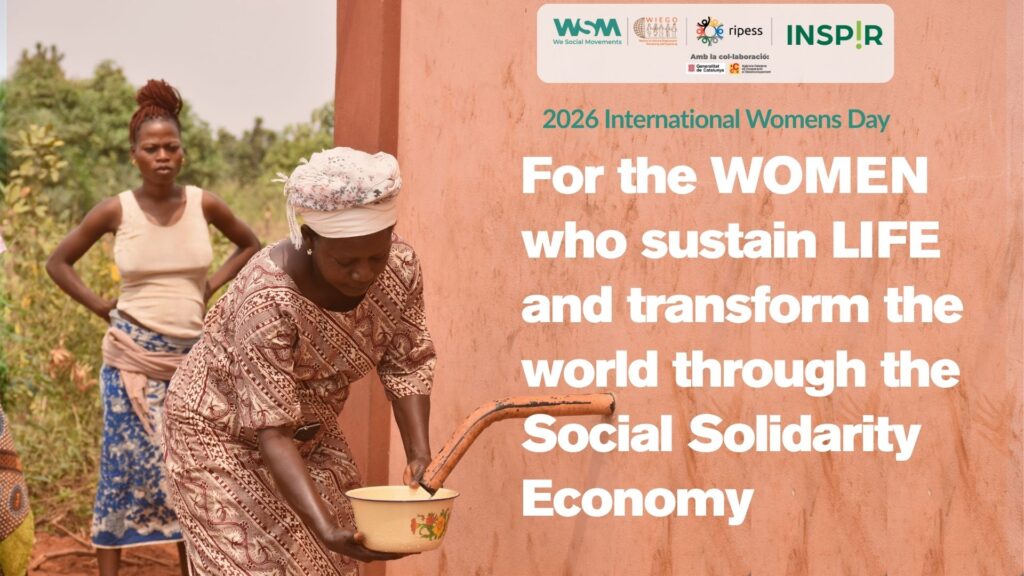
In the context of International Women’s Day, the WSM/INSP!R, WIEGO and RIPESS networks continue to join their voices to affirm a common conviction: the Social and Solidarity Economy (SSE) is a concrete way to guarantee decent work, universal social protection and care for all.
This 8 March is an opportunity to highlight that millions of women—especially in the informal economy and in rural areas—not only sustain life in conditions of inequality, but also drive profound economic transformations. Faced with a model that reproduces precariousness, exclusion, and gender gaps, they are organising cooperatives, care networks, productive initiatives, and forms of community management that demonstrate that another economy is possible and already underway.
From this perspective, we propose a three-pronged approach that connects structural transformations with concrete experiences led by women.
From informality to decent work: when organising changes the rules
Globally, more than half of the workforce is employed in the informal economy. Women are overrepresented in its most precarious forms: street vending, domestic work, recycling, family farming, and micro-enterprises without social protection.
Faced with this reality, the SSE acts as a bridge to decent work. Through cooperatives, associations, and mutual societies, women workers improve their incomes, strengthen their bargaining power, and gain access—either fully or partially—to social protection schemes. Collective organisation transforms individual vulnerability into political power.
In different countries, domestic workers, recyclers, and street vendors organised in processes supported by Women in Informal Employment: Globalizing and Organizing (WIEGO) have achieved legal recognition, spaces for social dialogue, and influence in public policy. These experiences demonstrate that when women organise themselves in SSE structures, they not only improve their economic conditions, but also transform the rules of the labour system.
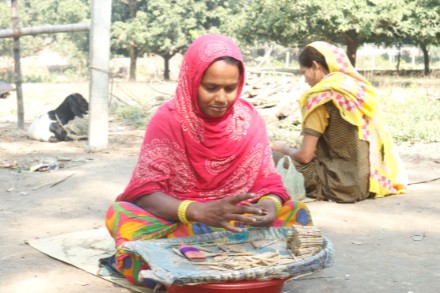
An emblematic example of women-led economic organisation is the Self-Employed Women’s Association (SEWA) in India. SEWA brings together millions of women workers in the informal economy (street vendors, home-based workers, farmers and waste pickers) who have built production cooperatives, solidarity-based financial services and social protection systems. Through these social and solidarity economy structures, women workers have managed to improve their incomes, access health insurance and strengthen their collective bargaining power. This experience shows that when women in informal employment organise collectively, they can build their own economic institutions that transform both their working conditions and their social power.
Universal social protection: solidarity turned into a right
Access to social protection remains deeply unequal. For many women in informal employment, health, pensions and maternity leave remain distant rights.
The SSE helps to close these gaps through solidarity-based and collective mechanisms: health mutuals, cooperatives that facilitate affiliation to public systems, and associations that act as social service providers where the state fails to reach. In this way, social protection is no longer exclusively linked to formal employment and becomes a right promoted by community organisations.
In several contexts, organisations linked to We Social Movements (WSM) and INSP!R have strengthened mutual societies and community health schemes that enable informal workers to access essential services. These initiatives show that organised solidarity can become a concrete infrastructure for rights, especially for women who have historically been excluded from traditional systems.
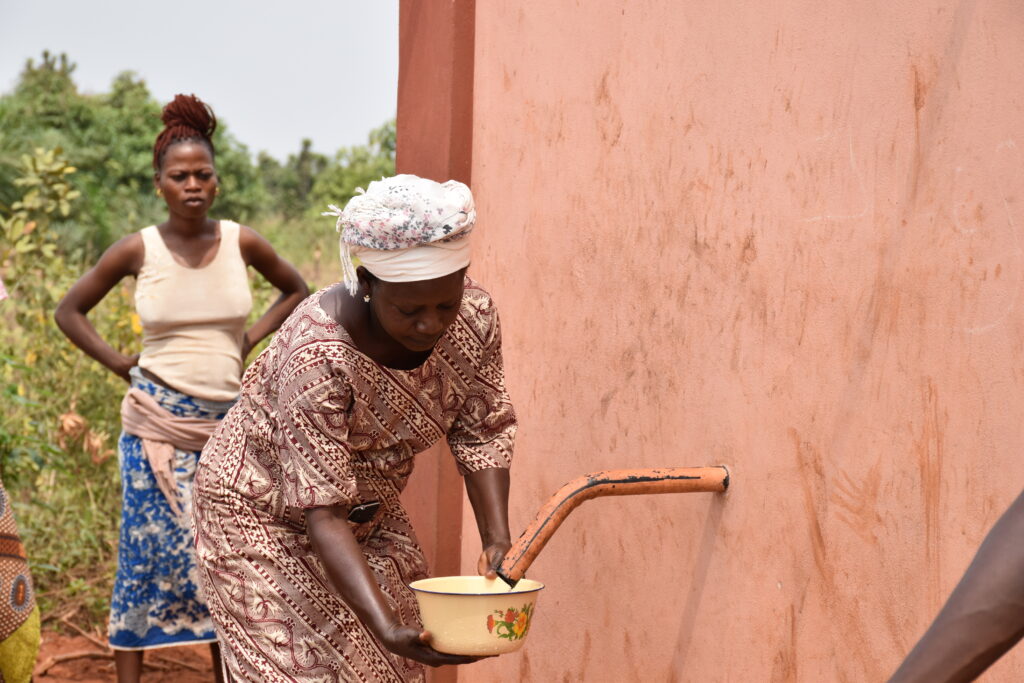
‘La Mutuelle pour le Développement à la Base’ (MDB) in Benin grants microcredits to the population, particularly women, in different regions of the country and supports them in the creation and structuring of cooperatives through various technical and administrative training courses. Thanks to the collaboration established with the APROSOC mutual society, the income generated by their social and solidarity economy activities enables them to cover their health insurance contributions, thus guaranteeing access to healthcare for themselves and their families, as well as encouraging them to save for their retirement.
Care and sustainability of life: putting what has always been there at the centre
Care work — both paid and unpaid — sustains life and the economy, but it remains invisible and feminised. Women bear the burden of long working hours that combine production, domestic work and community responsibilities.
The SSE proposes a structural change: recognising care as a public good and a human right, redistributing responsibilities and building community models based on social co-responsibility. Without integrating care into the economic architecture, there can be no sustainable transformation.
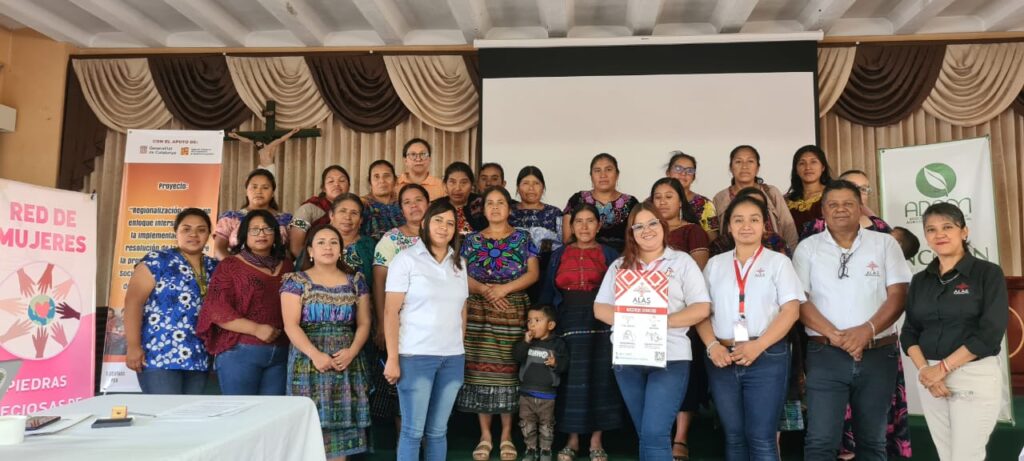
This vision is reflected in experiences such as that of the Association for Agricultural and Microenterprise Development (ADAM), RIPESS member in Guatemala, which is linked to social solidarity economy processes and regional dynamics of RIPESS LAC. ADAM works in rural communities in the west of the country with indigenous and peasant women who promote agroecological and solidarity marketing initiatives where care is an integral part of the entire production chain. Caring for the land, native seeds, the community and people is not a parallel task: it is at the heart of the model.
Care is a pillar of life and in our rural communities, it has been present in the care of children, the elderly, the land, animals, crops and water.
Among its practices, the following stand out:
- Intergenerational agroecological groups, where older women pass on traditional knowledge and young people strengthen their capacities in solidarity-based management.
- Community childcare networks organised by women’s associations, which free up time for economic participation.
- Governance spaces that explicitly incorporate the dimension of care, promoting the redistribution of time and the recognition of caregivers.
These intergenerational networks not only sustain life: they generate social cohesion, strengthen women’s economic autonomy and consolidate productive models that respect the land and people.
A feminist call to action
On this International Women’s Day, the organisations and networks WSM, INSP!R, WIEGO and RIPESS reaffirm the need for:
- Public policies that link labour formalisation with rights and comprehensive care systems.
- Legal and budgetary frameworks that fully recognise the SSE.
- Effective participation of organised women workers in the governance of labour and social policies.
- Recognition of care as a structural pillar of social justice and sustainability.
The experiences of women organised in the SSE show that transformation is not a promise for the future: it is already happening in local communities.
Because caring is producing life.
And an economy that puts life at its centre is, necessarily, a feminist economy.
Article published, in Spanish, in El Salto, by Santiago Fischer, Federico Parra, and Isabel Pascual from WSM, WIEGO, and RIPESS, respectively.